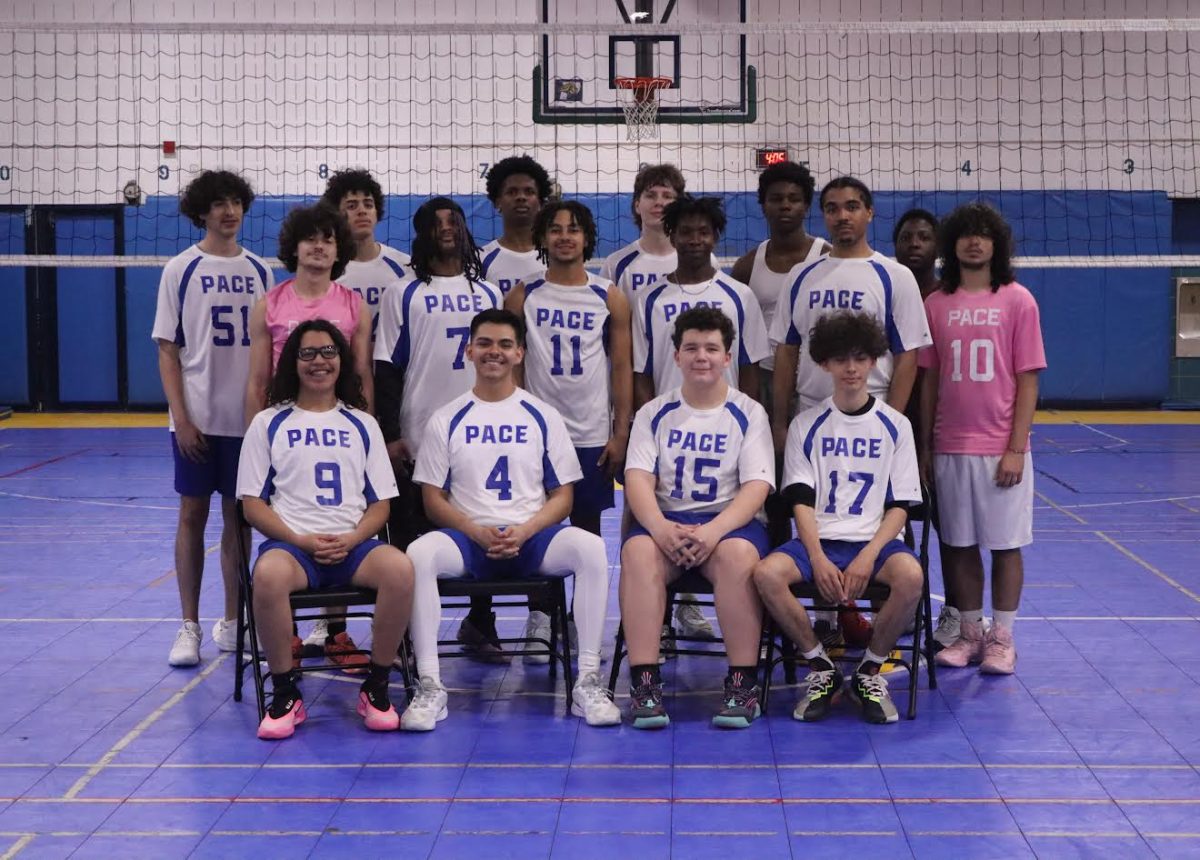
Balancing multiple roles in a school setting is no easy task, especially when it involves being both a teacher and an athletic director. Ms. O’Sullivan manages this responsibility daily while also coaching boys volleyball.
“She makes sure that we have the talent, but we sometimes don’t put that talent on the court,” said senior volleyball player Matthew Stamoulis. “She tries to give everybody a turn to show their commitment and show that they really want to play volleyball.”
A typical day for Ms. O’Sullivan starts early and moves quickly.
“I get to the school around 7:45 in the morning, and at that point I’m usually doing some paperwork, checking eligibility, parent consent and medicals; trying to set up scrimmages and making sure that games and all the teams are set,” she said.
Her mornings are filled with organization and communication, often meeting with administrators during the first period while preparing for her math classes: statistics and Algebra 1 Regents prep. Throughout the day, students frequently come in and out with sports-related concerns, adding to her already busy schedule.
After the school day ends, her responsibilities in the spring shift immediately to coaching the boys volleyball. “At 2:40, I grab all my stuff and try to get practice underway by 3 o’clock,” she explained.
Her day continues well beyond the classroom, showing the level of commitment required to support student-athletes.
Outside of the classroom, Mr. Lee believes Ms. O’Sullivan’s relationships with students are what make her unique. As the boys volleyball coach and athletic director, she spends much of her time supporting student-athletes both during and after school hours.
“She’s involved outside of the classroom pretty much at every basketball game,” Mr. Lee said. “Not only making sure that rules and regulations are being followed, but also as a support system.”
When asked about impactful decisions, she emphasized that success in athletics comes from consistent, smaller choices rather than one major moment. “I don’t know if it’s one big decision. I think it’s a lot of small decisions,” she said. Her decisions are made alongside school administrators to ensure programs run smoothly.
One example students do see is the Student Athlete of the Month Program. “We wanted to make sure that we were honoring the work that people do because it is difficult to balance academics and sports,” she said, highlighting the importance of recognizing student effort.
Eligibility is another major part of her role, and she is clear about the expectations placed on student-athletes. “You are supposed to be a student before you are an athlete,” she said.
She explained that there are two types of ineligibility: one that can be improved, such as grades during the season, and one that cannot be improved, which is not having enough credits.
She also stressed the importance of staying on track academically. “You can only fail at most one class to remain eligible,” she said, reinforcing the idea that schoolwork must come first.