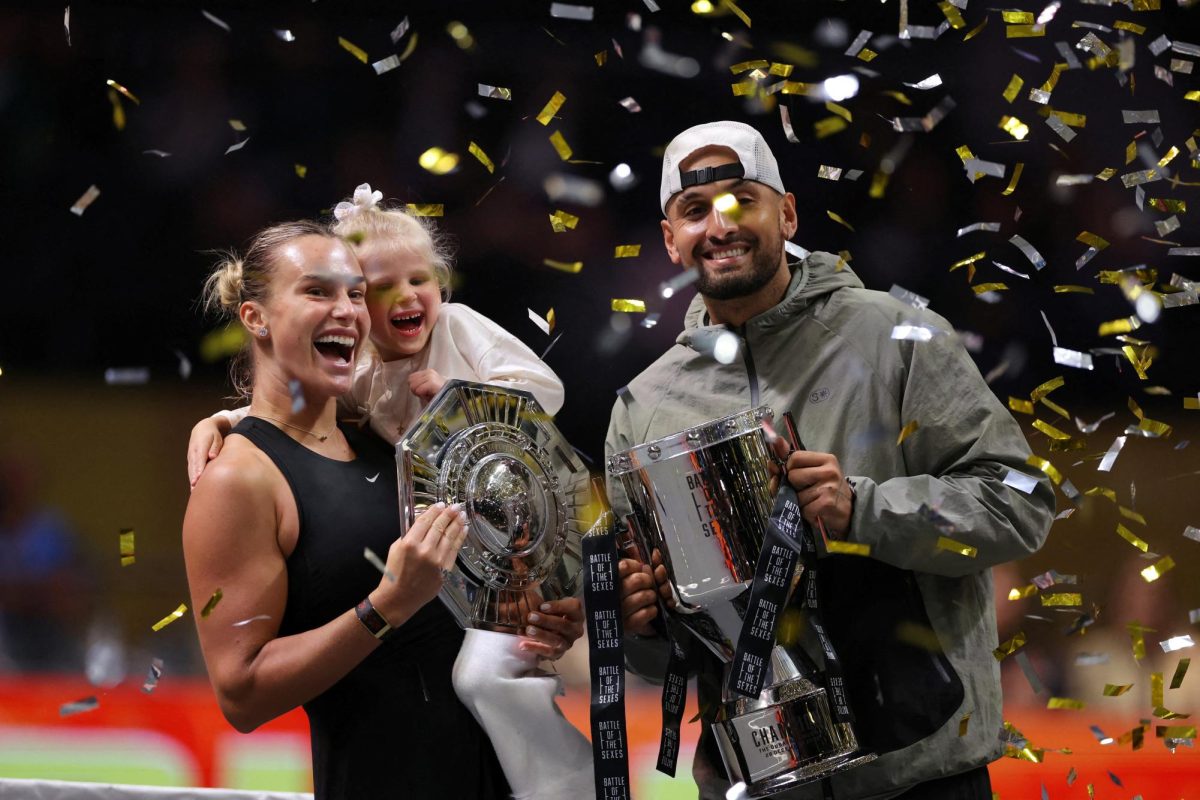
The second “Battle of the Sexes,” between men’s tennis player Nick Kyrgios, formerly ranked No. 13 in singles and currently No. 671, and Aryna Sabalenka, the current No. 1 women’s player in singles, was held in late December. The match felt like a meaningless male versus female competition, especially when it was meant to bring tennis into the spotlight of sports.
Both players knew this match would put them at the forefront of tennis and make them a large undisclosed chunk of cash. This influenced their choice to join a lot more than the desire to compete and see what’s possible. If this match was seen as a competitive battle of the sexes to test the limit of who could win, it would’ve made more sense to be a larger match.
In 1973 Billie Jean King played against Bobby Riggs in the first “Battle of the Sexes.” Bobby Riggs had been talking a huge game, being 55 years old and recently beating another top female athlete, Margaret Court, in straight sets. King, after seeing this, accepted Riggs’ challenge, and broke his idea that the women’s game was inferior.
King beat Riggs in straight sets, showing that women’s tennis was a major sport. She clearly fought this match with a fierce competitive spirit, and Riggs had a lot of pride on the line too. This is what a battle of the sexes should be like, competitive and fiery.
During the match in December, Sabalenka and Kyrgios sat on a court laughing, playing at 75% of their level at best. It wasn’t a showing of what it could have been, they clearly didn’t care about competing at their best for the match, obviously prioritizing the Brisbane tournament that this match was an exhibition for.
All of that would be fine in a vacuum, but marketing it as the “Battle of the Sexes” becomes problematic in knowing the match is unserious and unimportant.
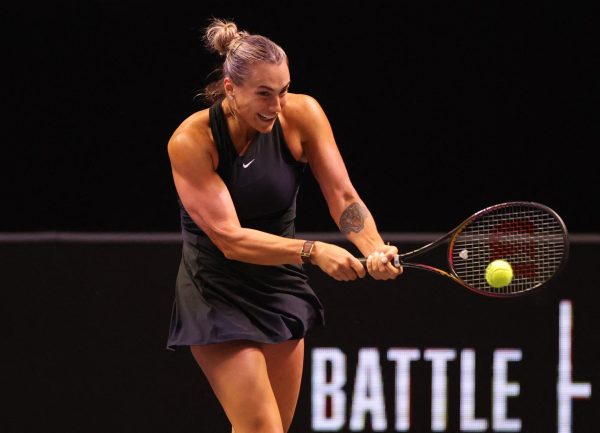
Fans have an understanding that there isn’t a need for a big grudge match around social change anymore, King did that for the fans years ago. However, everyone still wants to see a match played at 100%, a true competition.
And that match would have likely been closer than many think, due to the special rules for this match. A 9% smaller court for Sabalenka and only one serve on both sides gives her an advantage and a way to compensate for the speed difference in men’s versus women’s tennis.
Overall, the next time we see a big tennis tournament market for the “Battle of the Sexes,” it needs to be more competitive and higher stakes than this one. This was boring and a meaningless remaking of King and Riggs’ match.