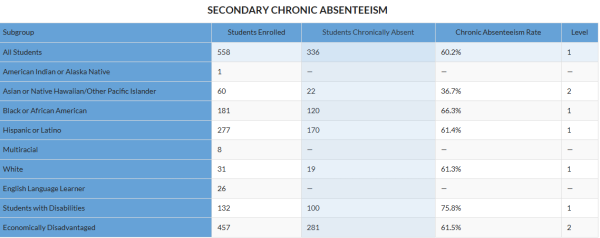
In the 2023-24 school year, 558 students were on the roster at Pace, but 60 percent were chronically absent. This means 336 students missed 10% or more of school days, which in a year of school is a potentially problematic amount. More than half of the student body missed more than three weeks of school that year. For reference, 30% of students are chronically absent across all DOE schools, and Pace doubled that.
Chalkbeat reported the beginning of the rise of chronic absenteeism during Covid, when rates exploded up to 40% across the DOE.
“Pace saw this growing issue during the pandemic, and we realized we needed change; the first step was the standards-based grading system.” Ms. Derosa provided valuable insight on how Pace started curating grading to what the students needed.
“If students genuinely aren’t able to come to school some days, they should be graded on the work they do, not the work they don’t,” Ms. Derosa said about the goal of a standard-based grading system.
There are students coming from five boroughs to Pace, some coming from over two hours away. This makes a large impact on the chronic absenteeism rate as well.
A student who wished to remain anonymous said, “The issue for me is the commute. Coming from Brooklyn, it takes a while. If I wake up a bit late, then I could be over an hour late to school; I just don’t see the point sometimes.”
More recently the Pace staff created an attendance team led by Mr. Glatz. They meet a couple times a week to talk about the state of attendance at Pace.
“There’s also an attendance teacher who makes at-home visits. We try to do intervention and incentives for students,” Ms. Derosa said. This entails one-on-one contact with most students, and they felt confident they were making it to that one-on-one contact the majority of the time.
This group is hoping to bring our attendance rates back up, possibly with some time and many home visits from our attendance teacher, Ms. Burgos.